


Elemental Analysis

Elemental analysis
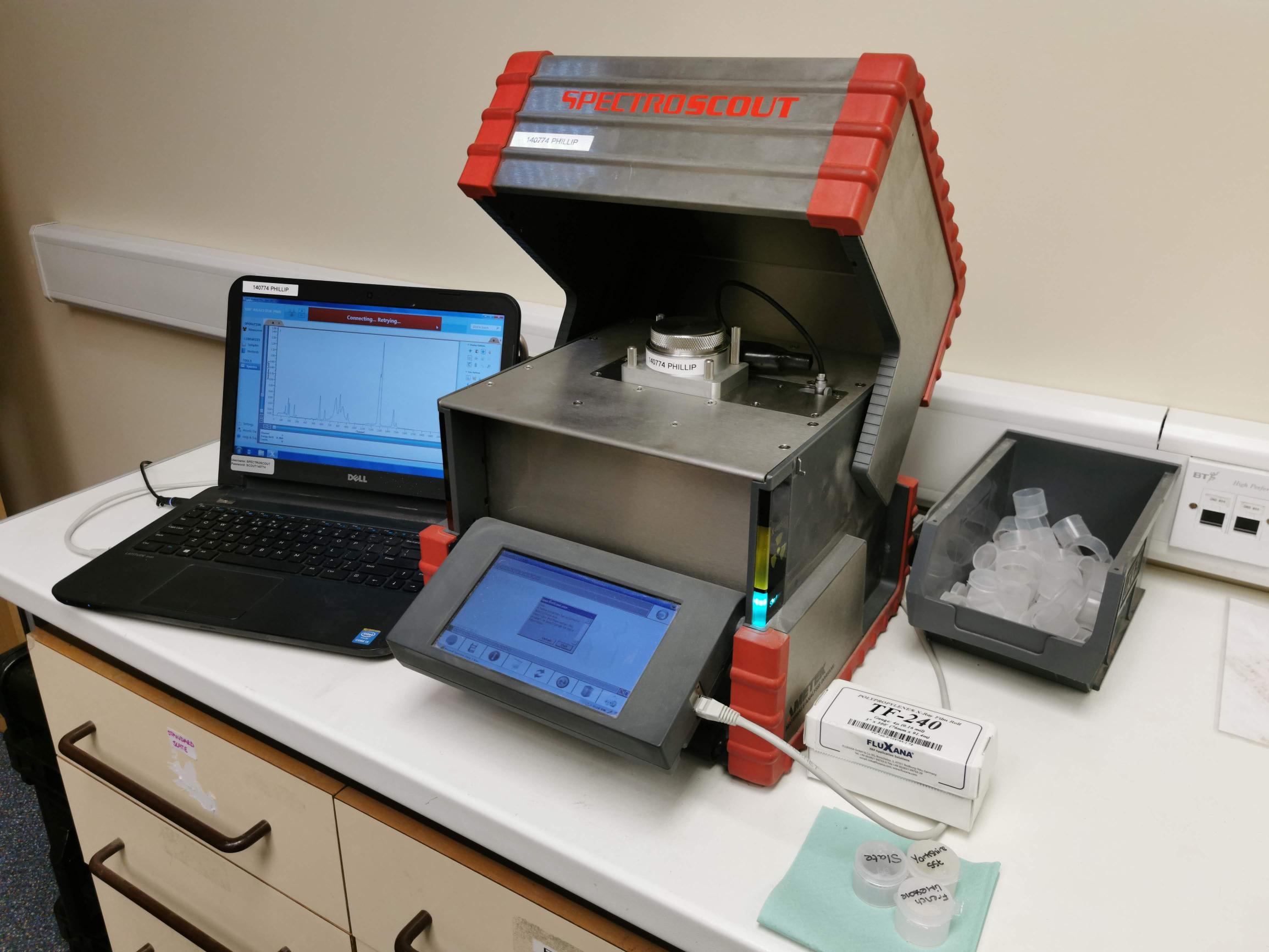
X-ray Mineral Services can provide elemental data from a range of analytical techniques depending on client requirements and applications. We have high resolution laboratory techniques that are part of our META1 workflow and portable equipment that contribute to our META2 workflow. In the laboratory, we can provide XRF, ICP, LIBS, LA-ICP-MS and Automated Mineralogy (SEM-EDX)®, and pXRF and pLIBS for field deployment (META2). In addition, we have dedicated workflows for the analysis of sedimentary rocks in oil and gas applications, ‘hard rock’/ore materials, battery minerals, Critical Raw Materials (CRM including Au, Ag and PGEs), bricks, tiles and aggregates and other materials. We have considerable experience in the calibration and deployment of cost effective portable elemental analysers (XRF and LIBS) at wellsite, in the field and at the mine site.

- XRF – Gold standard lab based instruments
- XRF – Portable and Hand Held instruments
- ICP – Certified data for up to 50 elements
- LIBS – Broad elemental coverage
- Automated Mineralogy (SEM-EDX)® – Automated mineralogy
Our laboratories are routinely in the top 10 commercial laboratories in the global proficiency test (GeoPT) and routinely generate high quality data for clients. The ICP laboratory is ISO9001:2015 certified. Additionally, the laboratory provides cross validational elemental data to aid the characterisation of poorly defined materials, to ensure accurate forensic quantification.
X-ray Mineral Services is equipped with a full spectrum of XRF capability which includes laboratory based WD-XRF and ED-XRF, portable bench top ED-XRF and hand held XRF analysers. This suite of instrumentation provides flexibility for our clients and ensures that we can offer the most appropriate analytical service for the project, whether in the laboratory or onsite. WD-XRF is the gold standard technique where samples are prepared using our automated fusion unit that produces homogenised fused discs. This technique is best suited for highly precise measurements of major elements in rock, mineral or materials quality control. Our laboratory ED-XRF provides complementary data for up to 40 trace elements (matrix dependent) from pressed pellets. Both of these instruments are part of the GeoPT standard reference material proficiency programme and our results can be supplied to clients to demonstrate effective data quality for the workflow. XRF obtains some elements that ICP finds difficult, especially volatile elements such as S, Br, Cl, As, Pb. We have developed specific analytical workflows for sedimentary rocks in the oil and gas and aggregates sectors and for ores with bespoke calibrations to cope with battery minerals and Critical Raw Materials (CRM) where key elements can be present at very high concentrations and can create complex analytical interferences.
Portable ED-XRF (Benchtop and Handheld XRF)
We have developed our own suite of matrix matched standards that are used to supplement the calibration of our field ED-XRF and pXRF instruments. This ensures that high quality data can be acquired for a suite of elements depending on the application (c.40 elements by ED-XRF in sedimentary rocks/ores, or 15-20 elements by pXRF and HH-XRF). Our pXRF instruments are robust and can be readily transported into the field, core store or wellsite and provide data in minutes. Instruments can be deployed with an operator, or for equipment only rental (with a tested calibration) and deployment can be supported for remote data interpretation if required.
X-ray Mineral Services is equipped with four ICP instruments including two Thermo Scientific XSERIES 2 ICP-MS and two iCAP 7000 Series ICP-OES. These tools are commonly used to analyse elemental concentrations within rock, soil or mineral samples, however, they may also be used for the analysis of a wide variety of sample types, including solids and liquids. We can supply certified ICP data for up to 50 elements and have established analytical protocols for rocks, soils and clay, battery minerals, CRMs and contaminated waters. We can offer a Laser Ablation ICP-MS (LA-ICP-MS) service for high resolution grain mapping geochemistry and for geochronology.
The laboratory is a long standing member of GeoPT proficiency testing and can supply clients copies of certificates to demonstrate data quality across a wide spectrum of rock, mineral and material matrices. The laboratory offers bespoke analytical options for the determination CRMs including Au, Ag and PGEs
Laser Induced Breakdown Spectroscopy (LIBS) is a rapid chemical analysis technology that uses a short laser pulse to create a micro-plasma on the sample surface. This analytical technique is complementary to XRF and ICP and the technique can be deployed in the laboratory and in the field and forms part of both our META1 and META2 workflows. The technique has some specific advantages that include:
- A sample preparation-free measurement experience
- Extremely fast measurement time, usually a few seconds, for a single spot analysis
- Broad elemental coverage, including lighter elements, such as H, Be, Li, C, N, O, Na, and Mg
- Versatile sampling protocols that include fast raster of the sample surface and depth profiling
- Thin-sample analysis surface analysis without deeper substrate interference making is suitable for paint and plating analysis
A typical detection limit of LIBS for heavy metallic elements is in the low-PPM range. LIBS is applicable to a wide range of sample matrices that include metals, semiconductors, glasses, biological tissues, insulators, plastics, soils, plants, soils, thin-paint coating, and electronic materials. X-ray Mineral have experience in using LIBS for metal recycling, phosphate ore characterisation, chemostratigraphy in the oil and gas sector, Li analysis and materials analysis.
Automated Mineralogy (SEM-EDX)® Automated Elemental Analysis
We have considerable experience in the use and interpretation of Automated Mineralogy (SEM-EDX)®, MLA and other automated scanned SEM instruments. These instruments acquire elemental data from a suite of x-ray detectors and can be deployed as spot analysis or for elemental mapping. These powerful instruments can provide elemental maps of grain slides or of polished blocks and will supply mineralogical and textural information. This technique is critical in the investigation of the mineralogical affinities of elements and can be combined with electron microprobe data if the element is present at low concentrations.


Hafren’s Chief Scientist participates in the European Lunar Symposium 2024
Alan R Butcher gave a talk at the recent Lunar Symposium in Scotland, which was fittingly held near to astronaut Neil Armstrong’s ancestral home in the town of Langholm (Dumfries & Gallaway), and marking the 55 year anniversary since the Apollo 11 landing on the...
Hafren Scientific & the Geological Survey of Finland (GTK) renew their Memorandum of Understanding
Hafren Scientific Group (Hafren) are delighted to have recently signed a Memorandum of Understanding (MoU) with the Geological Survey of Finland (GTK). This will enable both parties to work collaboratively on applied geoscience research, consultation, education, &...
Sand from the Sahara
Record-breaking temperatures in recent weeks were due to warm air being pushed up from low latitude, bringing with it a plume of dust arising from wind storms in the Sahara. The plume even reached…