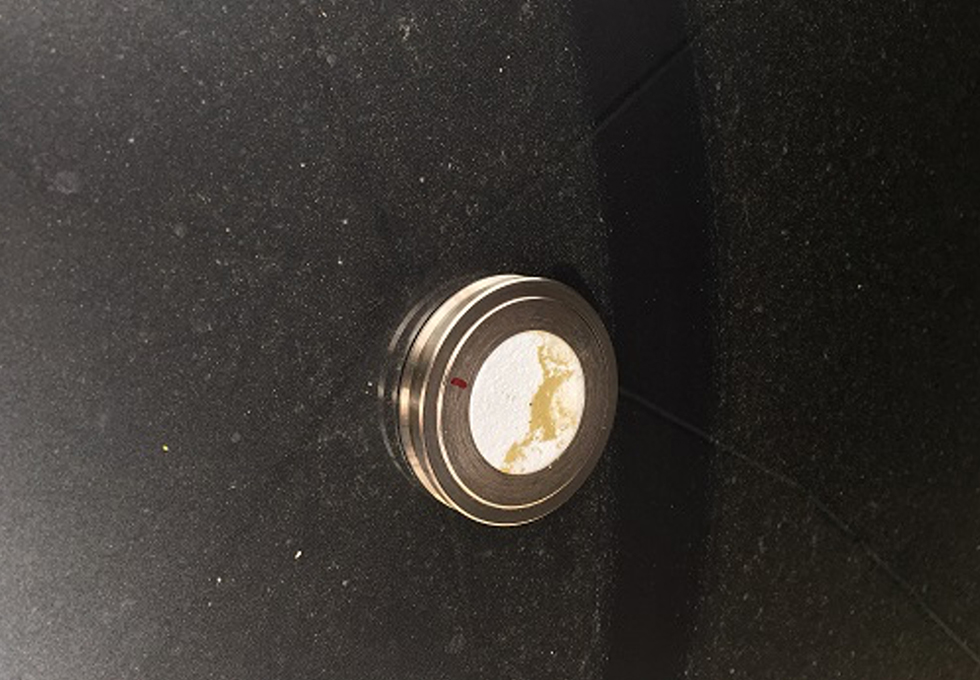
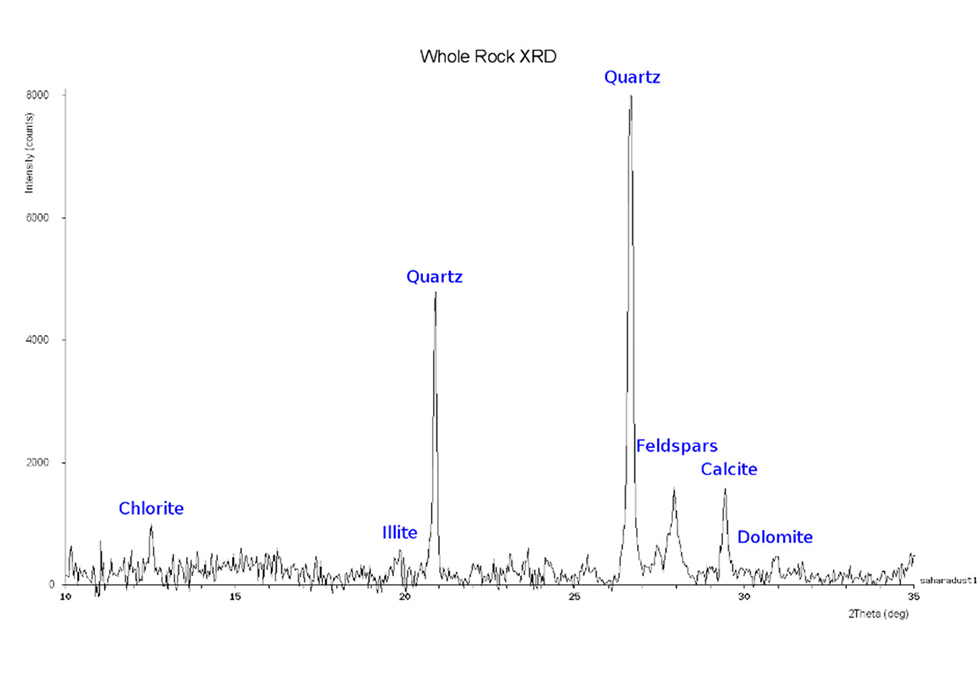
We were impressed that we had good intensities and were able to quantify the material using Rietveld analysis. The results of this are shown in the table below:
Illite Chlorite Quartz Feldspars Calcite Dolomite
Mass % 14.9 6.2 41.3 24.7 9.2 3.7
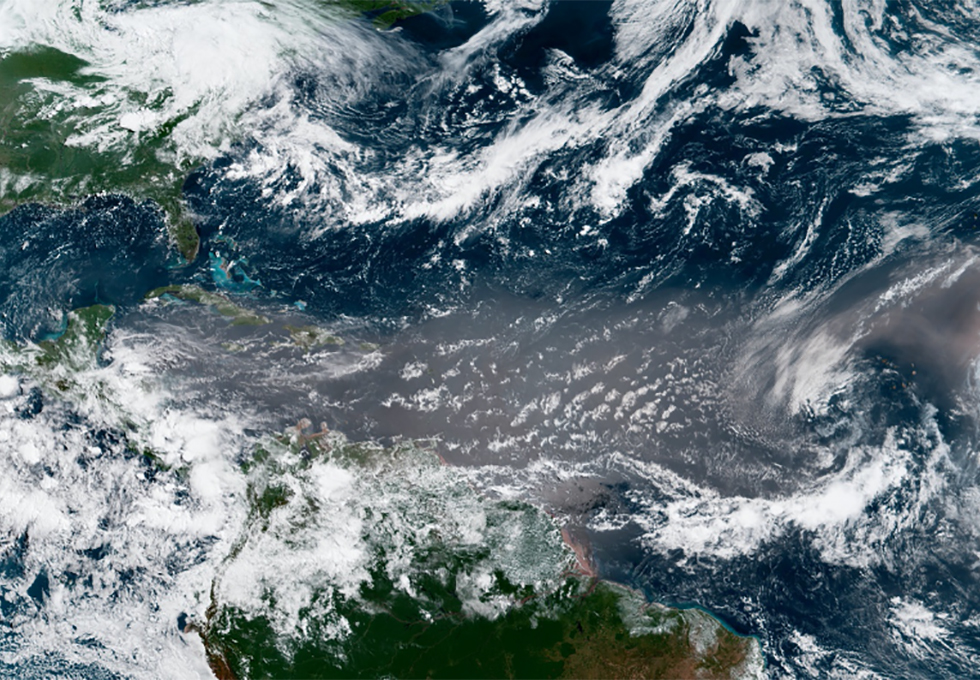
There are some fantastic images of previous events that have been collected by the Earth observation satellites operated by NOAA for the USA Department of Commerce. Here is one showing dust streaming out across the equatorial Atlantic from June 2018.
Digging around uncovered some interesting papers on dust emissions. It has been estimated that around 240 million tons of such dusts are deposited annually on and around the Atlantic Ocean, and the iron which is contained is a critical nutrient for marine algae in surface waters, the basis of the food chain, of course.
Iron is often difficult to pin down using XRD, since the iron oxides and hydroxides which give colour to geological materials is of poor crystallisation, or even amorphous. It is no surprise that iron-bearing phases are not detected in this diffuse and low-density XRD preparation.
All great XRD interest, but the rain from Storm Hannah washed it all away in a trice.