


Raman

RAMAN
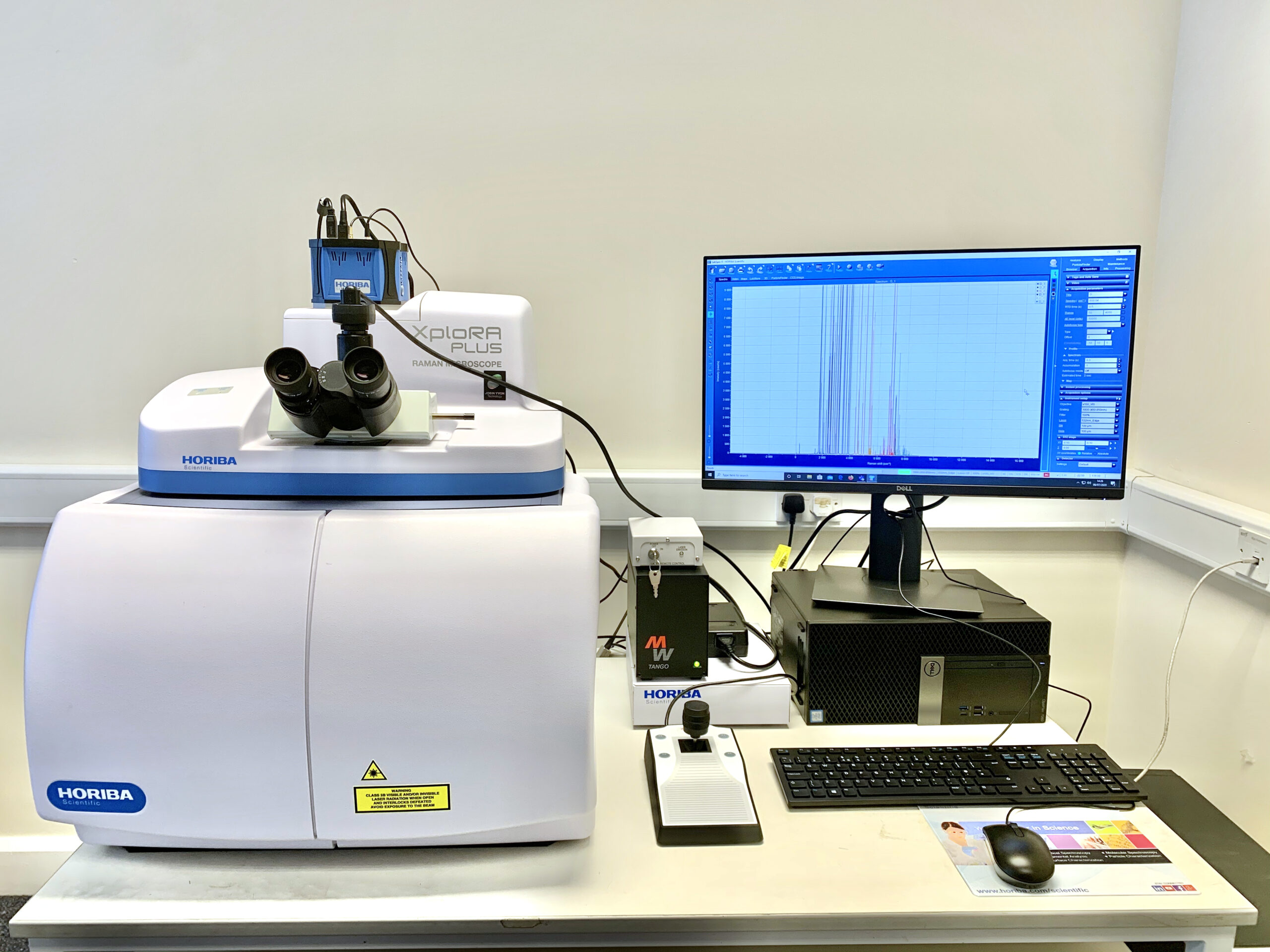
Automated Heavy Mineral Analysis – Raman spectroscopy is an automated mineral identification technique. It is a rapid, non-destructive analytical technique based on the scattering monochromatic light from a laser interacting with a molecule and causing various types of scattering of photons. Raman scattering is detected by the CCD detector and can be output as a spectrum which represents the chemistry and structure of the analysed material. The technique is used for the identification of grains or particles in material, pharmaceutical and geological applications, such as digital petrography and heavy and light mineral provenance analysis. The instrument also captures textural data on the samples and can map polished sections to acquire contextual information. Raman analysis also involves the capture of grain images that provide grain textural attributes such as angularity and sphericity; important criteria in sediment provenance recycling.

- Rapid, non-destructive analytical technique
- Consistency between datasets
- Quickly analyse large numbers of grains
- Identification of grains or particles, textural data and contextual information
- Heavy mineral analysis
- Light mineral analysis
- Grain textural data
Our utilisation of Raman spectroscopy enables us to analyse finer grained sediments than is typically possible with the traditional optical microscopy technique. From this, we have developed our own Enhanced Siltstone Petrography service which aims to expand our capabilities beyond the typical analysis of sandstones into finer grained material that often can make up the bulk of sediments in a basin.
Traditional optical analysis is inherently open to bias due to the heavy reliance on interpretations made by the microscope user. Consistency between datasets requires highly experienced optical mineralogists, but datasets collected by different analysts can produce incomparable results. Automated Raman spectroscopy utilises image analysis to rapidly analyse large numbers of grains (>1000) in a heavy mineral sample and is consistent between datasets. Given that Raman scattering is influenced by both chemical composition and structure, minerals that have the same chemical composition can be differentiated based on structure (e.g., the titanium oxide minerals, rutile, anatase and brookite). Garnet is a mineral that can differ in composition depending on the composition of its parent lithology. These compositional differences can be identified by Raman spectroscopy, allowing better characterisation of potential sediment source areas.


Groundbreaking Study on Cobalt-Gold Mineralisation in Northern Finland
Alan R. Butcher, Chief Scientist at Hafren Scientific, has co-authored an innovative study exploring newly discovered cobalt-gold mineralisation in northern Finland. This research, led by Senior Author Sayab Mohammad, utilised a range of advanced analytical techniques...

Hafren’s Chief Scientist participates in the European Lunar Symposium 2024
Alan R Butcher gave a talk at the recent Lunar Symposium in Scotland, which was fittingly held near to astronaut Neil Armstrong’s ancestral home in the town of Langholm (Dumfries & Gallaway), and marking the 55 year anniversary since the Apollo 11 landing on the...
Hafren Scientific & the Geological Survey of Finland (GTK) renew their Memorandum of Understanding
Hafren Scientific Group (Hafren) are delighted to have recently signed a Memorandum of Understanding (MoU) with the Geological Survey of Finland (GTK). This will enable both parties to work collaboratively on applied geoscience research, consultation, education, &...