


LIBS
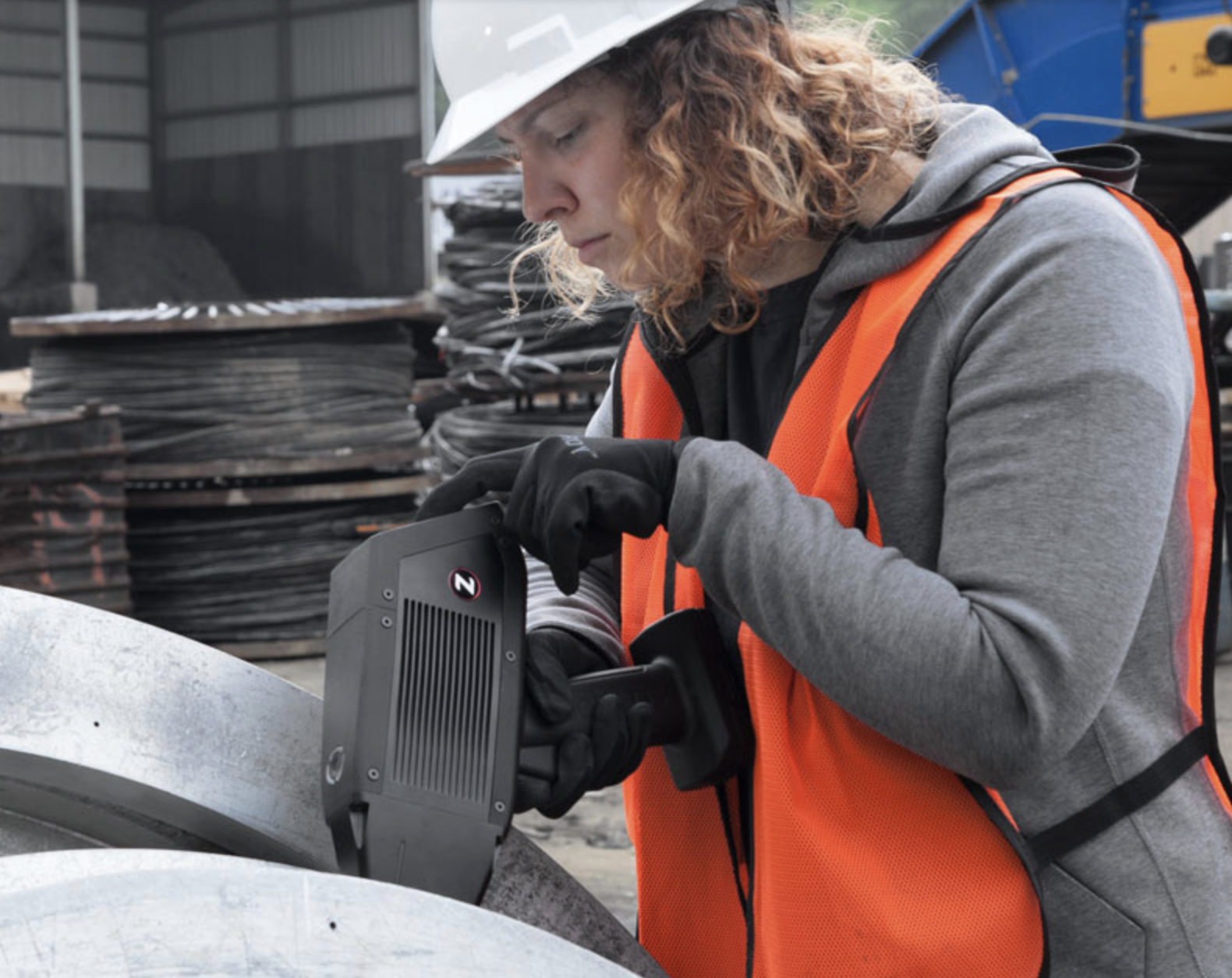

Laser-Induced Breakdown Spectroscopy (LIBS)
Laser-Induced Breakdown Spectroscopy (LIBS) is an atomic emission spectroscopy technique. It provides accurate in situ analysis using high energy laser pulses to optically excite a sample. The interaction between laser and sample creates an ionised plasma, the plasma light emissions from which can be recorded into a “spectral signature” that then can be used to define elemental concentration either qualitatively or quantitatively.

- Fast in situ elemental analysis
- Non destructive
- Applications in a range of disciplines
The technique can be further adapted to study layer thickness by changing the firing time of the laser or targeted at certain elements by introducing different filters between the spark and detector.
Due to its highly portable design and lack of complicated chemical preparation, Hand Held LIBS is commonly applied in archaeology, biomedical and field geological applications, being very nearly non-destructive only leaving a small crater that is almost indistinguishable to the naked eye.
The technique is not limited to field-based applications however, with larger lab-based systems providing better spectral ranges providing a wider spectrum and, in some cases, a better elemental quantification.