


FTIR


FTIR
FTIR (Fourier Transform Infra-Red) analysis provides mineralogical and TOC data as percentage abundance with minimal sample requirement. FTIR is a spectroscopy technique that collects data from a broad spectral range in the infrared. The acquired data undergoes a Fourier transform (a mathematical operation) to convert the raw data into the spectrum used for mineral determination. While XRD undoubtedly remains the gold standard for mineralogy when time or sample location is no issue, FTIR can supply cost effective bulk mineralogical data comparable to an XRD for many minerals in less than a minute.

-
Cost effective bulk mineralogical data
-
Minimal sample material required
-
Easily portable and can be deployed in a wide variety of industries
FTIR can also be used to determine TOC and the proportion of bound water in samples. The technique is suitable for very small samples with less than <0.2g of powder ground required for analysis.
Our FTIR instruments are portable, extremely compact with a footprint of an A4 sheet of paper and a weight of c.7kg. They can be placed in almost any working environment with virtually no set up time. It can readily be transported to a wellsite, core warehouse or mine and hundreds of samples can be analysed is a short timeframe without having to ship or transport samples to the laboratory.
For accurate results, the instrument is calibrated with a test dataset from XRD and/or LECO using samples that cover the composition range of the unknowns. Once achieved the FTIR calibration model can be used for high volume rock characterisation capable of analysing >100 mineralogical and TOC samples per day. Critically, the instrument is easy to operate and can be deployed by non-specialists.
FTIR data are routinely used to provide mineralogy in rock mechanics analysis for shale gas wells and increasingly deployed in in ‘tight’ sands to determine clay content and type. Using our XRD skills, X-ray Mineral Services have developed FTIR models for battery minerals such as spodumene (Li ore), chalcopyrite (Cu ore) and other minerals and have used FTIR to differentiate talc (a key penalty phase) in metal mines. FTIR has been used in the coal industry to provide indications of coal rank. We have recognised, however, that FTIR is sensitive to both coal maturity and maceral content/type. We are currently working with coal samples of known maceral content and maturity to build a model that will provide quick and cost-effective ways to analyse CSG intervals.
The technique can be used in geotechnical rock mechanics and construction studies and is widely deployed in the pharmaceutical, petro-chemical and agricultural sectors.
CASE STUDIES

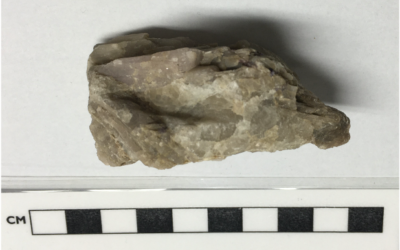
Spodumene Case Study
Spodumene is an unusual type of pyroxene with a lithium content that is present in commercially significant amounts (percent levels).It is one of only a few natural primary sources of lithium and is…
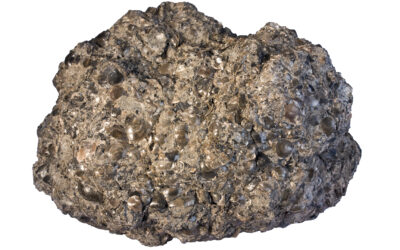
Phosphorites and REEs
With the recent announcement from China that they will seek to develop Lithium-Iron-Phosphate (LFP) batteries, it is clear that interest not only in lithium but also sources of phosphate will…
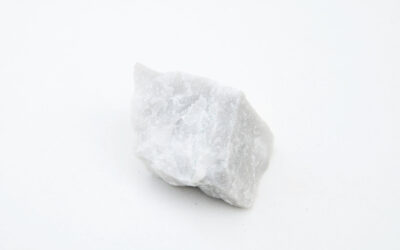
Talc Case Study
Talc (Mg3Si4O10(OH)2) is not a battery mineral but its correct identification in the gangue minerals of an ore is essential for successful battery metal extraction.Talc is a magnesium phyllosilicate…